
Would you like to interview one of these amazing people for Anthill?

img

What’s the most important entrepreneurship lesson you have ever learnt? Here’s mine.

October 13, 2010 | By James Tuckerman

I’m often asked, ‘What’s the most important piece of advice you can give new business owners?’ I could say that the most important lesson in business is to never stop learning. And I’d be telling the truth.

However, these otherwise sage words are not particularly practical. And they are about as satisfying to most entrepreneurial minds as a McDonald’s cheeseburger is to a Sumo Wrestler’s appetite.

After much thought, factoring in seven years of interviews and coffee meetings with hundreds of entrepreneurs, from single person operations to international masters of the game, such as Bill Gates and James Dyson, and having built my own business over this time, there is one piece of advice that trumps all others.

And it can’t be captured in a simple truism or cliche.

Rather, it requires an anecdote.

James and the Football Fan

Throughout the history of Anthill, I’ve sought advice from a variety of mentors and peers. (And I’d recommend all new and established business builders to do the same, although that’s not the piece of advice I’m building to.)

Some of the relationships have been fleeting. Some have guided me in ways that are impossible to articulate and quantify.

One of these lasting and (hopefully) mutually beneficial relationships is with a person who became an adviser and confidante to Anthill in late 2004, in Anthill’s second year. This mentor prefers to keep a discreet profile but, for the purposes of this story, it’s important that I mention that he, whom I’ll now refer to as ‘Malcolm’ (Malcom the Mentor), is a particularly passionate AFL supporter and is involved with one of the clubs in a professional capacity.

It’s also worth mentioning that on all the important fronts (although Malcolm might disagree), this mentor has proven himself to a be a person worth learning from — highly successful in business, with a wonderful loving family and a strong respect for work-life balance.

Aside from all that, all Anthill readers really need to know is that he doesn’t mind sharing what he thinks in direct tones (if he needs to). But he prefers not to. Indeed, he’s more likely to offer guidance in more measured ways, as the following tale demonstrates.

In other words, I’ve rarely taken his words lightly and the following anecdote was, indeed, a game-changer for Anthill.

How to win a Grand Final

In late 2005, Malcolm asked me a rhetorical question.

“James,” he said. “How do you think a football team wins a Grand Final?”

He posed this question during casual conversation, with a telling glint of enthusiasm in his eye. This could have been mistaken as a sign of his passion ‘for the game’. But, to those who have worked with Malcolm, it could equally be interpreted as a hint that an indirect offer of guidance is on the way, likely to hit with the of force a Sherrin delivered from the boot of Barry Hall.

Naturally, I replied, “I don’t know. How does a football team win a Grand Final?” (despite a personal lack of interest in all sports… beyond the entrepreneurial sphere, of course).

Here is the detailed reply I received.

A winning team is like a pyramid

A winning team is like a pyramid.

Successful team presidents, company boards and coaches know this intuitively, even if they never put it on paper. And every pyramid requires a foundation of fundamentals.

Fundamentals

Fundamentals represent the bottom third of the pyramid.

FUNDAMENTALS 300x300 Whats the most important entrepreneurship lesson you have ever learnt? Heres mine.

Players must be fit. They must be able to run for kilometres, without tiring, kick-straight, handball accurately, tackle within the rules and do all those things expected of elite athletes.

Strategy and Talent

The second layer of the pyramid is all about ‘Strategy’ and ‘Talent’.
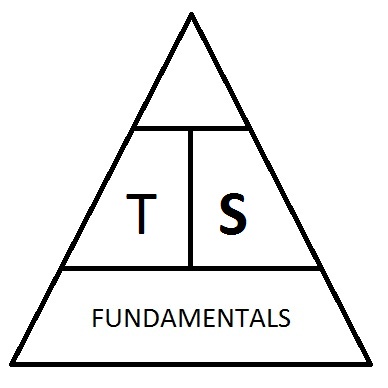
STRATEGY TALENT 300x300 Whats the most important entrepreneurship lesson you have ever learnt? Heres mine.

It’s about getting the best players, the best team captains, the best coaching staff and then putting a clear strategy in place to guide the talent and exploit the fundamentals.

Flair

The tip of this hypothetical pyramid is ‘Flair’.

FLAIR 300x300 Whats the most important entrepreneurship lesson you have ever learnt? Heres mine.

A winning team needs a special type of magic that only a few people possess; the ability to lift a human body to heights otherwise inhumanely possible to mark a ball, before kicking a goal, perhaps over a shoulder or through the opponent’s legs, just as the siren blares to win the game.

We all know flair when we see it. It’s what we remember. It’s what makes something remarkable. It’s exciting. When we employ flair, we often feel great about ourselves. Many entrepreneurs have this is spades.

What’s the moral of the story?

Malcolm’s story about football teams and pyramids had seemingly reached its conclusion. But a meaningful pause accompanying those final words about flair hinted at a lesson in the offing.

“James,” Malcolm finally continued. “Do you know what I see when I look at your business?”

The question wasn’t posed to solicit a reply, so I simply shook my head and stayed silent.

With more than a hint of good humour in his voice, he concluded the lesson.

“I see an upside pyramid — all flair, no fundamentals. You have an upside-down pyramid.”

Never stop learning

Of course, this was true. And the advice was said with affection, not malice.

Inevitably, the following diagram formed in my mind.
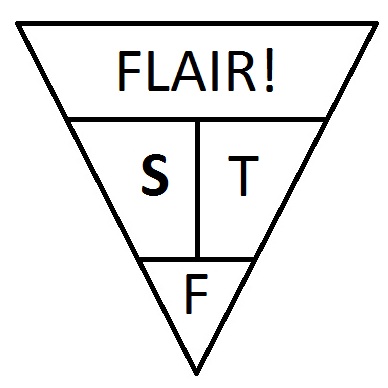
UPSIDE DOWN PYRAMID 300x300 Whats the most important entrepreneurship lesson you have ever learnt? Heres mine.

Like any typical entrepreneur, I had built my business using ‘big picture’ thinking.

I had wanted to build a business magazine that would be remarkable, that people would talk about, that would challenge publishing conventions, that would attract like-minded people like a magnet, that would change things and be memorable.

I had achieved these things, built a brand without a marketing budget, won awards, had been recognised by the Australian Business Publisher’s Association for, in their words ‘creating a new market segment’. Yet, I still found myself spending most my time darting from one cashflow issue to the next, missing editorial deadlines and spending weekends ‘catching up’.

In my mind, I was a success because Anthill was meeting my ‘big picture’ goals.

But with one light push, my precarious upside-down pyramid could have easily toppled, because it lacked The Fundamentals.

What’s the most important entrepreneurship lesson from your experience?

Four years after this eye-opening analogy, we are still getting the fundamentals right.

In fact, managing the bottom layer of the pyramid is an ongoing process that requires ongoing improvement. And I don’t mind admitting that this period of imbalanced priorities and lack of processes put pressures on the business that continue to complicate our lives today.

For that reason, I have decided to create a short article series on The Fundamentals – The Five Things Every Entrepreneur Must Do When Starting Out (or a slightly more retweetable headline when I can think of it).

If you are about to kick-off a new venture, hopefully this series will help you avoid making the same mistakes that we did. If your business is already established, perhaps this series will offer a ‘refresher’ (rather than a frightening wake-up call).

But before I get started (and put fingers to keyboard once again), I’d like to ask you, dear readers, to share the most important business lesson that you learnt when starting out.

Or, what was the lesson you wish you knew, in hindsight, that you later discovered the hard way. (My favourite comment will win its author a copy of award winning documentary ENRON: The Smartest Guys in the Room, as a lesson in what not to do.)

So, what’s the number one lesson you wish you knew back then?

Learn from Threadless, Etsy, BoingBoing and more

Want an ad like this?

Gvivid Learn from Threadless, Etsy, BoingBoing and morelobal creative industry leaders are coming to Sydney for Vivid (25 May- 11 June).  Find out how to harness crowd funding; predict the next shift in tech adoption; explore the DNA of startups; turn failure into success. Most events free or under $30.

www.vividsydney.com

  • Matt

    The trick is, you dont need to know everything…! All you need to know is the correct people to ask on a given subject..Horse for courses! If you need help ask…most people are willing to point you in the right direction.

    [Reply]

  • http://www.vivocafe.com.au Angela Vithoulkas

    It would be difficult to find a more demanding industry than hospitality – I say that proudly! We don’t get to miss deadlines ’cause we only have a few minutes anyway to deliver! I have been doing this for 26 years full time and I wouldn’t change businesses for anything except money. Thats what I wish I had remembered to focus on during the booms. Strange comment? Perhaps.
    Growth from a boom period is dangerous because you think you are invincible. What goes up can and will come down. In start up, there is only up.

    [Reply]

  • Davin

    Assess, adapt and then assess again! Having a plan is vital but in business opportunities often come from unexpected places. Jumping on every opportunity however, is not always the best idea. Be prepared to change your plan, in fact be prepared to change full stop. Just because things don’t work out the way you planned doesn’t mean you failed.

    [Reply]

  • http://cozport.com.au Susie

    The most important thing I have learned as an entrepreneur is to keep focused, remain diligent and take massive action every day!

    [Reply]

  • Susie

    PS James, I am really getting a lot out of your articles recently – they have taken on a certain shape – one might say FLAIR!

    [Reply]

  • http://twitter.com/babysitterdirec Ann Nolan

    Excellent post Tim and much of it so true. In fact now I am nodding my head as I write this! But two things I think were missing. Stamina and Optimism. Because building a business takes a hell of a lot of stamina to get you by the ‘difficult time’ and lets face it you need a bucket of optimistic outlook to start any venture.

    [Reply]

  • CB

    Great post. Only thing missing from the triangle of course is where the customer sits!

    [Reply]

  • Ian B

    After ten years I have learned that the single greatest limitation I experienced in my business (alkaway.com.au) is my own mind. Business and its performance is, I believe, a DIRECT and TOTAL reflection of the person running it, so if I don’t like what I see, it’s telling me that there is work to be done ‘at home’ in my own attitudes, prejudices and limitations. When I convince myself otherwise, I try to remind myself of Richard Branson.

    [Reply]

  • Hasnain

    Ensuring that you have the resources (time, cash, support) to help you carry forward if your carefully hatched plans don’t meet targets. As they say, business plans often turn out to be o target but in twice as much time. Be ready for slippages because you will learn a lot, sometimes take U-turns and may have to abandon a few projects to ensure the more important ones take shape. If you have arranged these ‘extra’ resources, you may not have to abandon ship mid-way as so many entrepreneurs have to do often.

    [Reply]

  • http://radsmarts.com Robin Dickinson

    One word: discipline – the source of all sustainable competitive advantage.

    Best, Robin
    Helping you succeed in business

    [Reply]

  • Jen Bishop

    RESILIENCE, INNOVATION,STRATEGY and KREATIVITY( deliberately spelt incorrectly).
    These all add up to a personality that can tolerate RISK. If you can’t tolerate risk and uncertainty, you are never going to make it as a entrepreneur.

    I began an entrepreneurial venture in my 20′s (one of the first Personal Training businesses in Australia) and left after three years, because I doubted myself, listened to too many other people (that there was no future in it).

    As an older person in a different business, and 15 years in corporate, I realise that you must be able to tolerate uncertainty and risk to follow your vision.

    [Reply]

  • Leigh

    I’m going through the process of starting my first venture… So this is not gospel from someone who has been there and done that (YET!)

    KEEP IT SIMPLE – The two business fundementals that we need in place as foundations to the pyramid are (Drum roll…) SALES and PROFIT. What business would exist without them?

    [Reply]

  • Kjacobs

    Start small and spend no more in capex in the first year while you are starting out that you are not prepared to accept was sub-optimal at the end of the year (worse case is you will have to bin it).

    I believe its virtually impossible to make optimal capex decisions. What is optimal capex? It needs to be the right type, the right brand, at the right time at the right cost. Most capex is wrong in at least one area. When you are starting up a business its too hard to get it right so its best to start small, learn the ropes and then incrementally build the business and add to your capex. Inevitably you will have to admit that while your capex spend might have been well directed it was put into the business a bit too late. OK thats suboptimal but its better than being suboptimal because it was the wrong type.

    [Reply]

  • Sophie Dewi

    think outside the box. Problem is great because it might be a source of un tapped opportunity – meet new people (customer, friend, mentor), challenge yourself, force reviewing process, and of course a good excuse to treat yourselves with a bowl of ice cream, nice wine, or basically just anything when it’s all done :)

    [Reply]

  • John Maher

    John Maher

    Great article and the number one lesson I learned very early was to involve the people who knew their stuff, or it would cost dearly!

    [Reply]

  • http://melbourneangels.net Jordan

    James, here’s one I know you will identify with and it has certainly been my own greatest challenge … you can’t do it all on your own!

    No matter how much it seems the best/fastest way forward for a new venture, flying solo will almost always end in tears.

    I always knew that teams work better than solo and I put lots of time into learning how to build teams in many different environments. Sadly, the environment keeps changing and the way to get the right team for an entrepreneurial venture keeps changing in subtle and not-so-subtle ways.

    Success always requires lots of hard work, you get more hard work done with a team but, teams require trust. Trust is a fundamental that is quickly granted, easily lost and hard to win back.

    Flair attracts, strategy convinces, talent executes, fundamentals sustain and trust holds it all together. Trust between team-mates, trust in leadership, trust between companies and their customers.

    You can’t do it alone and you can’t work with others without trust.

    [Reply]

    James Tuckerman - Anthill Mag Reply:

    Congratulations Jordan!

    You just scored yourself a copy of award winning documentary ENRON: The Smartest Guys in the Room for your well crafted and ever-so-true observation.

    [Reply]

  • Old Mentor

    James, I was pleasantly surprised to see my advice to you feature in your magazine. Also flattered! I have also followed the other responses with interest. By and large, though, I still think your entrepreneurial readership takes the “fundamentals” far too lightly. If I were to draw the pyramid again, I would make the fundamentals bit TWO THIRDS of the pyramid! In fact, I now say to another group of mentees, regularly, if not ad nauseam, “Guys, it’s the boring bits that make you money!” Flair, talent strategy et al may bring the customers to you and have investors sniffing around. But get your basic business processes right – smooth, fast, efficient, accurate, and low cost – and you will build a great, profitable and sustainable business. Hope you get over the problems caused by the theft. Your old mentor.

    [Reply]

  • James

    James,

    When are you planning on doing the article series The Fundamentals – The Five Things Every Entrepreneur Must Do When Starting Out. It has been a while since you wrote the original article and I have really been looking forward to it.

    [Reply]

blog comments powered by Disqus

Find Us on facebook

Latest Video

Waiting for the great leap forward? I think it’s already here [VIDEO]

Throw away your keyboard. Discard your mouse. All you need to do to control your computer is wave your hands about. No instruction manual needed, just a teeny, tiny device that reads your hand motions. Really. The revolution in human-computer interaction just took a massive leap forward.

More>>

Latest Comments

Ant Mart

Anthill Amabassadors

Marketing & Media

Sponsored by Google

What do you know about Google AdWords? This hub was developed to answer the questions you already have, and those you haven’t thought yet to ask.

More>>

thumb

Growth & Export

Sponsored by How to become a Key Person of Influence

Key People enjoy a special status in their chosen field because they are well connected, well known, well regarded and highly valued.

More>>

thumb

Anty-Climax

Sponsored by Antmart

It’s a group buying site specifically created for entrepreneurs and business builders.

More>>

thumb

Tech & Innovation

Sponsored by AusIndustry

AusIndustry is a specialist program delivery division within the Department of Innovation, Industry, Science and Research.

More>>

thumb

Upcoming Events

MAY
29

Want more leads and customers? Half day event to get big outcomes from a little budget.

Have you ever wondered… Why every industry has only a few businesses that thrive and get more leads? And they don’t suffer from cash flow problems or lack of leads, even when there is an ‘economic downturn’. They don’t have to ‘push’ or make stacks of cold calls.

More>>

MAY
22

WEBINAR: How to turn your knowledge into products… and build a global empire in your underpants!

This webinar is all about how to unlock your valuable industry knowledge and turn it into a product. It’s about how to increase the value of your business and take control of its future.

More>>