
5 steps to stand out in your market using internet video [WEBINAR]

img

Simple logos are the best logos

April 15, 2010 | By Alec Lynch

I’m sure I’m not alone when I say that simple logos are the best kind of logos. If you don’t agree, consider the world’s top 100 brands, according to Interbrand.

In the universe of logos it is widely agreed that there are five main types:

  1. Wordmark
  2. Lettermark
  3. Pictorial
  4. Abstract
  5. Emblem

By far and away, wordmark and lettermark logos are the simplest. These are pure text or character-based logos.

This post analyses the top 100 most famous logos and brands of the world to hopefully demonstrate that simple logos (wordmark or lettermark logos) are synonymous with sucess.

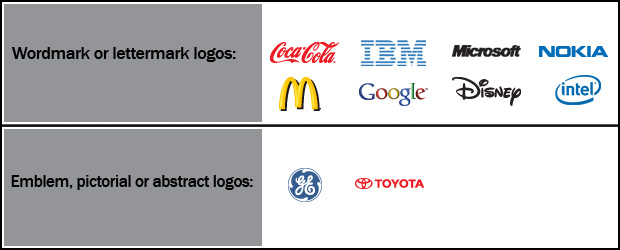
Fact #1: Eight of the top 10 brands – from Interbrand’s Top 100 brands of the world 2009 – use a simple wordmark or lettermark logo.

The Top 10 Global Brands – Logos by Type
top 10 global brands  Simple logos are the best logos

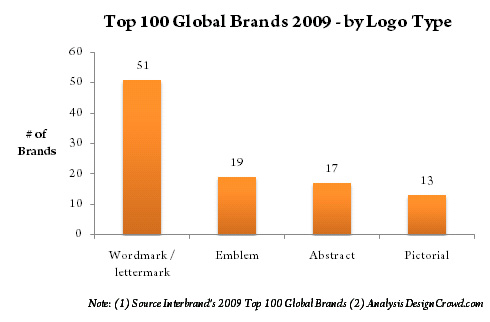
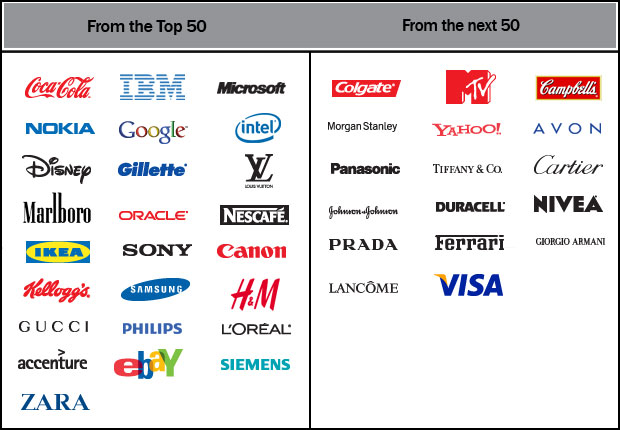
Fact #2: Fifty-one of the top 100 brands of the world use a wordmark or lettermark logo.  That is, their logos are simple, text-only and free from icons, pictures or emblems.
famous logos image1 Simple logos are the best logos

Fact #3: The top 50 global brands contain 16% more wordmark/lettermark logos than the next 50 famous brands (48% of the top 50 brands are wordmark/lettermark logos, while out of the ‘next’ 50 brands, 32% are wordmark/lettermark logos). Thus, when you analyse the ‘best of the best’ when it comes to brands, more of them use wordmark or lettermark logos.

famous logos image2 Simple logos are the best logos

Conclusions:

  1. Simple logos work well.
  2. Brands are more than a fancy logo.

While most designers, brand gurus and marketers know this already, business owners often don’t.  Either way, the above should provide strong evidence that simple logos are, in my opinion, the best logos. Whether you’re a growing brand or a new starter, think big but keep your logo simple!

The 51 wordmark/lettermark logos within the Top 100 brands of the world
top 50 next50 620w Simple logos are the best logos

Alec Lynch is the Founder and Managing Director of graphic design service DesginCrowd.com an online marketplace specialising in logo design offering access to over 10,000 logo designers from around the world.

Via designcrowd.com

 

  • Nathan

    Dear ordinary Australian small business people (the main audience of this blog).

    As your gut-instinct advises, please do not pay too much attention to this post.

    1) Applying principals from major US listed multi-national corporations, is often inappropriate with ordinary Australian small businesses.

    See through this “blog post”. This guy is just trying to sell his business, by feeding you irrelevant information.

    2) Spec-work businesses like “DesginCrowd.com”, de-value the Australia graphic design industry including small business graphic designers. ie: People like you.

    Thousands of qualified graphic designers, and The Australian Graphic Design Association are actively opposed to predatory pricing, free pitching, fee-reductions and non-paying commissions. This is something “DesginCrowd.com” operate with:
    http://www.no-spec.com/design-organisations-the…

    3) Spec-work business like “DesginCrowd.com” literally employ slave labour artists from 3rd world countries. That is why it is “cheap” – and nasty.

    If you want guidance about logo design. Speak with a qualified graphic designer.

    More online tips here at Smashing Magazine too.
    http://www.smashingmagazine.com/2009/06/25/10-c…

    [Reply]

    Paul Reply:

    You know, I was reading this article and I was wondering “this just seems like so much crap” But because I dont know too much about anything I was doubting this initial gut instinct. Then I read…

    “Dear ordinary Australian small business people, [a]s your gut-instinct advises, please do not pay too much attention to this post…”

    …and I thought “What do you know, my gut instinct works!”

    [Reply]

  • Nathan

    Shame on Anthill for de-valuing the Australian Graphic Design and small businesses.

    James, do some research before supporting anything and everything that comes your way.

    Pitching 3rd world people's livelihood against each other is not an ethical business practice.

    [Reply]

    leelacosgrove Reply:

    I really don't see how your post is any more ethical than Alec's article.

    Alec is using business research to make an argument for his company. You do the same.

    Personally, I think logos are generally a waste of time and money … but then I'm not in graphic design.

    Your posts are self-serving … you're just having a na-na because you're clearly a graphic designer who feels like someone is taking business away from you. Get over it. Small minded, lack mentality sounds like it's more to blame if you don't have the business you want.

    Alec's business doesn't hurt your business … your whining online and your obvious lack of understanding of general marketing principles (actually, what works in US multi-nationals is ABSOLUTELY relevant to small business in Australia … anyone who thinks there is some kind of nationality difference in marketing simply doesn't understand it) really does.

    [Reply]

    Simon Reply:

    Agreed Leela. Also, the business case/observations are separate from how this particular company does business. get an Aussie designer to do a 'simple' logo if you buy this case.

    [Reply]

    Rob Luck Reply:

    This looks like a fairly substantial train-smash of egos with not much useful info flowing between. So let's see if I've got this right – the current debate seems to be about whether you should get your logos down Down Under or Over There. What about getting the logo you want, regardless?

    The adage 'if it seems too good to be true, it probably is' might just work out with your budget logo deal. There again, who says the local product is superior. Forget the hype – comparison and evidence please.

    A problem I have with the article is that it seems to be (a) making a nonsensical definition of logos and (b) suggesting that certain types (of this nonsensical definition) are superior. The usual suspects – graphs and statistics – are called-in to shore-up a somewhat questionable hypothesis. And this is supposed to be viable. So that means some of the world's most recognisable logos, don't qualify. I'm sure Nike, Mercedes, Shell and Apple are seriously worried they haven't got a Wordmark or Lettermark logo (whatever that means). Oh yeah, the CEOs have seen the story and are right now committing hari kiri on their desk spikes because they haven't got the right sort of logo. And yes, of course they have written a blank cheque to Designers of America (or Designers of Australia) to come up with a really clever little logo like General Electric, Zara or Morgan Stanley – something that forever resonates with the customer. Right.

    I'm sure most business people will be aware that there are very simple logos that companies have paid hundreds of thousands of dollars for. There are others that have cost not a cent – OK, OK so maybe the cost of the table napkin they were conceived on. Corporations have spent millions of dollars on corporate branding which failed and others have risen to the fame on the back of a low-cost or no-cost image.

    Another issue that is usually glossed-over is just how much money is spent on promoting a logo. You can have a really great logo, but if you don't have a global logo marketing spend, it is no more recongisable than yesterday's graffiti. The fact that Top 50 or whatever logos belong to top 50 or whatever companies is not a function of logos driving business but of market penetration – and massive marketing expenditure. The fact that some top 50 or whatever companies have god-awful logos, proves that you don't need a logo to be successful. Good or otherwise.

    The Design Industry or whatever semantics-driven moniker it likes to use, has to realise that good design is not exclusive to them and that they are equally responsible for good, bad and mediocre design (including logos) regardless of ability, training and background.

    So you might get the logo you want scratched out in the dust of a Karachi pavement or on the pristine design table of a new York design studio. Or you might just do it yourself, like we did, in a jam-session on the officedesk.

    It's a free world and it's your choice.

    Name supplied

    johncochrane Reply:

    I'm with Rob Luck on this I'm no logo racist regardless if it fits into the top 5 types or not.
    In terms of a logo you'll either like it, not like it or don't give it a second thought.

    If you and more importantly your client and a sample of the clients target market like it, if it's easy to remember and fits the client's budget then all is warm and fuzzy. A logo can be easily created or take many hours. Some may have a significant philosophy for the client in using certain shapes, colours & font choice.
    To some extent a logo is something akin to a family crest or tribal symbol and in this reference then perhaps a graphical designed “logo” has been around longer that the written word.
    Cheers
    John

    Steve Reply:

    Ever feel you've been somewhat brainwashed by AGDA's mantra to attempt to protect Australian designers' margins from the world of commercial reality?

    It all sounds reasonable in theory, and surely no association is going to prosper if they encourage their members to do work for nothing, but nearly every business must take on risk to get reward. I really don't see why the design industry should be treated any differently. But I'm sure AGDA provide support for designers to manage their risk, maybe advice on contracts? Of course they do!!! Punch in 'AGDA design contract' and whats the first result?

    'Do you have legal questions you would like to ask but don't want to pay $600 an hour to speak to a lawyer?

    Good legal advice will now become more accessible for designers. '

    Thats right, AGDA encouraging designers to take advantage of lawyers for less than market rate at their seminars. So lawyers agreeing to part with a portion of their IP to help out and maybe garner some business along the way. Unethical? I'll let you decide.

    Sounds like your business is thriving nathan and i congratulate you if you've never had to risk creative effort to garner a contract.

    [Reply]

  • http://anthillonline.com/an-email-exchange-with-harry-hellraiser/ James Tuckerman

    Hi Nathan,

    Thanks for your detailed comments.

    Like all our posts, this is one perspective. We thought it was an interesting one. It might have flaws. It also has plenty of strengths. But the good thing about online journalism is that it offers a forum for people like yourself to offer a counter view.

    I'm not sure what you mean by 'slave labour artists' (any guidance would be appreciated). If DesignCrowd.com is engaging in practices that undermine or abuse human rights, we'll remove this post straight away. But I suspect that you posted your comment in response to more immediate hurt (the impact crowdsourcing sites are having on your own business).

    I do understand your frustration.

    For example, as a former print publisher, I still sometimes grapple with the notion that the market expects me to give up all our information for free on the internet.

    But I also need to accept that new ways are constantly evolving for the production of books, magazines, music, cars, almost anything that we can think off.

    While we have always argued vigorously among publishing circles that design is worth paying a high price for (and, indeed, design represented 30% of my budget on our first three editions of Anthill), we also need to acknowledge that disruptive change happens.

    To expect any industry to operate in a vacuum (bracketed by protectionism) and ignore international trade is myopic.

    It's a topic that I have written about before. In particular, I refer you to a post that I wrote in late 2008: http://anthillonline.com/an-email-exchange-with…

    [Reply]

    leelacosgrove Reply:

    Personally, I don't think you SHOULD be giving all your content away for free! But we'll talk about that … oh we will …

    [Reply]

    Nathan Reply:

    James, I was at the Sydney young Anthill meet-up. You organised and ran it extremely well. Everyone including myself had a great time. Well done. You and Jack also blew your own trumpets a little too long,.. but that's just my opinion. But I still look forward to the next event.

    I read your 2008 post regarding crowd-sourcing. The major point that was missed in your entire piece, (and all the comments) is that; it is unethical to encourage the market to skimp on quality, whilst pitting an Australian's livelihood, against low quality work and rates from a 3rd world country.

    Just because you can – it doesn't make it right.

    Attempting to justify your unethical actions with the argument that “ohhh… globalisation etc”, is the same as being against climate change initiatives, because “Australia is too small to make a difference”.

    It is double standards, and absolute hypocracy for a magazine like Anthill to CLAIM to support Australian small business, whilst actively pitting Australian small business graphic designers against low quality + rate Indian graphic designers.

    As I learnt the other week, Anthill accepts funding from the state governments to help promote entrepreneurship and small business. I'm sure they'd be disappointed to know what you're doing here by supporting crowd-sourcing which only destroys local industries.

    Finally James, I'm in the print publishing arena too. I'm completely aware of changing market notions. There are right ways to survive and succeed, and there are wrong ways. This is one of the wrong ways.

    [Reply]

    James Tuckerman Reply:

    Hi Nathan,

    Yes, I agree about the YENO event. Trumpet blowing was a little overblown. ;-)

    To summarise my views…

    1. The market will decide where to get the best quality for the lowest price.
    2. Some people will choose price over quality and quality over price.
    3. Skimping on quality is not unethical. (It's a commercial, pragmatic decision, sometimes made in error, but it's not unethical.)
    4. Purchasing a product or service from overseas is not unethical either. (It's not very good for local industries, but it's not unethical.)
    4. Purchasing a product or service from an overseas sweat shop or organisation that doesn't respect human rights is another matter. (That's clearly unethical. But that's also clearly not what DesignCrowd is doing.)
    5. Supporting local industries through protectionism or simply ignoring the global market is unsustainable. (Once again, it's not very nice to remove tariffs etc, but it prevents a loss of quality and helps maintain an industry's international competitiveness.)
    6. And, most importantly, quality is not confined to a geographic area. (Their are plenty of artless Australian designers. And their are plenty of great ones too… everywhere.)

    We've had to make plenty of decisions along these lines (editorial and commercial) on many occasions over the past seven years.

    The first question is will Australian design industries get better or worse if they are forced to compete with logos “scratched out in the dust of a Karachi pavement or on the pristine design table of a new York design studio”. The answer is a resounding, 'Yes'.

    The second question is should we be protecting or endorsing an industry simply because it's Australian. This question is harder to answer. But, in terms of our modus operandi, if an Australian designer does something remarkable, we try to write about it. If an Australian entrepreneur does something remarkable (even something that's disruptive and likely to re-engineer entire industries), we try to right about it.

    In this instance, based on the comments alone, tectonic-scale shifts are taking place. And they are causing angst and pain. After a while, the dust will settle, and examples of design excellence will emerge that may indeed by the product of new models.

    Some industries will whither and fade away.

    You clearly have a fighting spirit Nathan. I have no doubt that you'll come out the other side of this evolution still swinging, stronger, smarter, better equipped for the next wave.

    Thems my two cents.
    James

    [Reply]

  • Nathan

    Leela Cosgrove, why so quick on your assumptions? You're entirely INCORRECT!! Not good for your online reputation.

    > “You're clearly a graphic designer who feels like someone is taking business away from
    > you. Get over it. Small minded, lack mentality …etc etc”

    No. You are clearly wrong.

    I'm in the design industry and employ 30 creative staff. I've grown the business from scratch to be succesful leaders in our fields. As a leader, I feel it responsible to stand up for unethical behaviour that hurts peers and Australian small business.

    My business is doing great thankyou very much. (Again, your assumption was clearly wrong). It's doing great because I understood my local market and operating environment. I didn't get carried away with how a MULTINATIONAL company operates. Horses for courses? Ever heard of that one?

    The audience at Anthill are not listed on the Dow Jones. Throwing around stats about Dow Jones listed companies may be interesting, but not relevant. Throwing around Dow Jones stats to flog your business which operates unethically is wrong on every level.

    If you think that logos are a waste of time. You clearly shouldn't be making public comments about marketing. End of story.

    I strongly urge you and James to read the AUSTRALIAN graphic design association comments on spec-work:
    http://www.no-spec.com/design-organisations-the…

    Please take the time to do your research, instead of jumping on your populist bandwagon of “if it makes a buck!, it must be good!!!!!”. Be responsible for a change.

    I look forward to some actual informed comments, after you have done some research and understand why spec-work is destructive for Australian small business.

    [Reply]

    leelacosgrove Reply:

    Urrr … where are my assumptions wrong?

    You're a designer. A designer who doesn't even have the decency to post your full name or a link to your business – who feels you can attack people but who doesn't even have the guts to write a full name or give a link to your website. Another Troll.

    Lol. Shouldn't be commenting on marketing. I'll take that under advisement, thanks.

    [Reply]

    leelacosgrove Reply:

    And you know what … further … the above – including “the right and wrong ways to do things” are your OPINION. That doesn't mean you're right – and it doesn't mean everyone has to agree with you …

    You want to talk about hypocrisy?

    How about attacking people for expressing their opinion and justifying it with your opinion.

    I have the right to outsource my graphic design to India if I want (I don't, but I have every right to do that if I choose to). I have the right to send money anywhere in the world I want to. I have the right to have no ethical issue with that whatsoever.

    I also have the right to believe that I've worked with multi-million dollar businesses with no logos. And to believe a logo has nothing to do with a businesses success one way or another.

    These are all opinions – just like yours.

    [Reply]

    Nathan Reply:

    Yeah, let's just go all be selfish!

    I have a right to litter. I have a right to pollute. I have a right to kill near-extinct whales. I have a right to self-promote online. ME this. ME that.

    Please don't confuse opinions with RESPONSIBILITY:

    James doesn't have a right to support unethical practices which pit 3rd world Indians against Australian small businesses, whilst:

    - running a blog purporting to support Australian small business
    - accepting government FUNDING, to support Australian small business

    leelacosgrove Reply:

    Actually, you legally don't have the right to do any of those things. I never promoted breaking the law.

    This article isn't about outsourcing to India. It's not about outsourcing at all. It's about simple logos. I'm not sure where you're getting this lack of responsibility thing from.

    Or maybe you're just a bit annoyed because no one asked you to write an article …

    Which of course – they can't … because you refuse to say your real name or your website … which leads me to believe you're probably full of BS about a lot of stuff. I'd love to meet the Under 35 MD of a Medium Sized Australian business who believes that self-promotion is a bad thing … no, really.

    I dare you to give us your real name. And your company.

    Nathan Reply:

    If you think this article is about logos – you're sadly mistaken.

    It's about some guy linking unrelated data, and then promoting his unethical business that is counterproductive to the Australian creative industries – ON AN AUSTRALIAN SMALL BUSINESS WEBSITE.

    How can you not see this?

    It's like those people who think they have a business, when they are NETWORK MARKETERS. You know, those “businesses”, that don't actually do anything, or add any value to society.

    FAST PROFITS!!!!!! (Is that your current tag-line?)

    leelacosgrove Reply:

    Disagree that this article has anything to do with outsourcing …

    And don't really see what network marketing has to do with anything – although I agree, it's not much of a business model and not something I would, personally, go near …

    But you still keep attacking and not revealing yourself …

    Come on.

    Have the guts to give us your name …

    Nathan Reply:

    You know exactly what I'm talking about :)

    Everyone knows that there's two types of authors at Anthill.

    1)
    Those who have actually done something succesful, and genuinely want to support small business and their industry. Example: Sahill Merchant:
    http://anthillonline.com/tag/sahil-merchant/

    2)
    Those who are “on the way up”, but are really here to self-promote – flog themselves off. These people also have a gift of speaking &/ writing well. These people often will have a “business” that repackages as “NEW!!!!”: networking marketing (/information products, whatever you want to call yourself), and crowd-sourcing.

    The key is motives. It's all spin. The motive of this article was to flog off his business. (by providing losely related information).

    But you knew that already.

    Lesley-Ann Trow Reply:

    Nathan,

    I can only speak for myself, but as long time community member and contributor to Anthill, I think your comment about their being two types of authors here is deeply offensive, ill-considered and to be honest, just kinda purile.

    Granted, I realise you made the comment in an effort to score points against a formidable opponent in Leela Cosgrove rather than as a direct slur on other Anthill authors and I'm not here to defend Leela at all, as it's a well documents fact that she's quite capable of doing so herself.

    What I will say is this, if you're going to debate a point – stick to the point and if you do feel the need to drag others into it to score points then make sure you know what you're talking about. Some of the most interesting authors on Anthill are the ones who are on the journey right now, whether it be at the start, the middle or the end of one journey and beginning of another.

    There's something to be learned from everyone and you obviously have something to say so I'm going to challenge you to write it up and submit it. That's what the “want to write for anthill” link is for. I'm interested to hear you point of view without all the “noise” of back and forward comments and I look forward to reading it if it's deemed suitable.

    Cheers, LA

    Nathan Reply:

    Sorry I must have missed the internet sign-up contract, that guaranteed I would always list my full personal details down.

    Leela, unlike you, I'm not here to self promote.

    If you can't debate the merits of discussion on the topic of discussion alone, and not get personal, then the internet is not for you.

    Again, unlike you, I'm not here to self promote. Merely to stand up for Australian small businesses in the creative industries.

    [Reply]

    leelacosgrove Reply:

    Yes – of course.

    If would be horrible to self-promote. Very bad marketing. Thank god you are here to show us the way. Logos are the only way to create a strong business. We're only allowed to get them done in Australia. And we're not allowed to promote ourselves.

    Got it.

    There's no contract -we just call it good manners to be honest about who you are when you start attacking people.

    Nathan Reply:

    LOL.

    I just went to your website. You're one of those network marketers, pyramid scheme-like operators, who don't actually do anything.

    “Unique Value Propositions Pty Ltd and established herself as Australia’s #1 Information Product Specialist, “the chick who can monetise anything” and “The next Napoleon Hill”.”

    So HOW exactly does your business help society? What actual meaningful value do you bring society?

    You should read James' link:
    http://anthillonline.com/make-meaning-in-your-c…

    Of course people in your field don't understand anything about responsibility. They're just in everything to make a quick buck.

    I would recommend that people stop over-promoting themselves, and start thinking about helping Australian small business. This is the arena of this Anthill?

    If you can't debate the merits of discussion on the topic of discussion alone, and not get personal, then the internet is not for you.

    leelacosgrove Reply:

    Yep. Troll status proven.

    So long – and thanks for all the fish.

    Nathan Reply:

    Weak.

    If you want to support another business which destroys Australian small businesses in creative industry, ON A BLOG SUPPORTING AUSTRALIAN SMALL BUSINESS, then don't let a “troll” get you down.

    If you want a troll, head on over to 4-chan.

    If you can't debate the merits of discussion on the topic of discussion alone, then the internet is not for you.

    I'm looking forward to your explaination on what an “information product” is.

    leelacosgrove Reply:

    I think the whole Information Product thing might be a little bit beyond your grasp.

    Because it's a Product … right … that is created … still with me? … from information.

    Things you've probably never heard of before – crazy, out there, “network marketing” stuff … like books.

    Meanwhile – you're actually starting to scare me and I think you might have a screw or two loose. So I'm running away now …

    Nathan Reply:

    Seeing as though, we've reverted to promoting Leela Cosgrove again, let me understand. Your “business”, is like this guys…
    http://aureliustjin.com/

    Where can I download my “FREE!! UNSTOPPABLE PROFITS – LIMITED 21-day offer E-book?”

    Can I make $5,000 working from home too?

    5 years ago you were sticking these signs on telegraph poles, and now you guys have discovered the Internet, suddenly it's ok?

    leelacosgrove Reply:

    Why, thank you for asking Nathan!

    At Unique Value Propositions, we help you take the knowledge that's already inside your head and turn it into products – books, CDs, DVDs, electronically delivered courses – so that you can leverage your time more effectively.

    For instance, I have a client who is a chiropractor and he is developing an online “wellness” course – which is all about preventative medicine … how to take care of your body. He'll supplement the online course with live training as well.

    Another client is a neuro-surgeon who doesn't want to perform surgery for the rest of his life and so is currently writing a book that will give other surgeon's the information and distinctions he has had over the last 20 years.

    Yet another client is a martial arts instructor. After 30 years of instructing, his body is getting tired – so he is creating a series of DVDs that will take his students through how to do the basics, taking a great deal of strain off him physically.

    Thanks for the opportunity to promote our services, Nathan. I really appreciate it.

    Sarah Harte Reply:

    Interesting clash going on here. It was more interesting than the original article!

    Nathan, you've perhaps been a little too confronting in your tone. Maybe you've stirred the pot the wrong way?

    But I did do a little research and took a look at Leela's website. I would have to agree the actual business seems a little suspect.

    Leela, you were foolish to take the bait and promote yourself further.

    leelacosgrove Reply:

    I understand, Sarah, that sometimes it can be difficult to distinguish businesses that are real and those that are not – especially in this crazy, mixed up world.

    Our physical office is at 172 Victoria Street in Seddon, Melbourne – and you are more than welcome to drop by, Monday to Saturday, to see us and say hi.

    In terms of the work we do: here's a link to several video testimonials on YouTube. I also have more than 80 written ones (with full contact details from the people who have given them) – that perspective clients are always welcome to view.

    http://www.youtube.com/watch?v=hGYtsApjwrw

  • Nathan

    LOL.

    I just went to your website. You're one of those network marketers, pyramid scheme-like operators, who don't actually do anything.

    “Unique Value Propositions Pty Ltd and established herself as Australia’s #1 Information Product Specialist, “the chick who can monetise anything” and “The next Napoleon Hill”.”

    So HOW exactly does your business help society? What actual meaningful value do you bring society?

    You should read James' link:
    http://anthillonline.com/make-meaning-in-your-c…

    Of course people in your field don't understand anything about responsibility. They're just in everything to make a quick buck.

    I would recommend that people stop over-promoting themselves, and start thinking about helping Australian small business. This is the arena of this Anthill?

    If you can't debate the merits of discussion on the topic of discussion alone, and not get personal, then the internet is not for you.

    [Reply]

  • leelacosgrove

    Yep. Troll status proven.

    So long – and thanks for all the fish.

    [Reply]

  • Nathan

    If you think this article is about logos – you're sadly mistaken.

    It's about some guy linking unrelated data, and then promoting his unethical business that is counterproductive to the Australian creative industries – ON AN AUSTRALIAN SMALL BUSINESS WEBSITE.

    How can you not see this?

    It's like those people who think they have a business, when they are NETWORK MARKETERS. You know, those “businesses”, that don't actually do anything, or add any value to society.

    FAST PROFITS!!!!!! (Is that your current tag-line?)

    [Reply]

  • leelacosgrove

    Disagree that this article has anything to do with outsourcing …

    And don't really see what network marketing has to do with anything – although I agree, it's not much of a business model and not something I would, personally, go near …

    But you still keep attacking and not revealing yourself …

    Come on.

    Have the guts to give us your name …

    [Reply]

  • Nathan

    Weak.

    If you want to support another business which destroys Australian small businesses in creative industry, ON A BLOG SUPPORTING AUSTRALIAN SMALL BUSINESS, then don't let a “troll” get you down.

    If you want a troll, head on over to 4-chan.

    If you can't debate the merits of discussion on the topic of discussion alone, then the internet is not for you.

    I'm looking forward to your explaination on what an “information product” is.

    [Reply]

  • Kaye

    I do believe I enjoyed the comments the most! :P

    [Reply]

    Alec Lynch (DesignCrowd) Reply:

    Nathan and other readers,

    Firstly, I welcome Nathan's response. In saying that, I'd like to respond Nathan's comment in four parts:

    1) Regarding comments about the content of the article:

    The goal of this article is to make a point that simplicity is part of effective logo design. Nathan you are right that what works for a large, US company may not work for a small business in Australia. However, that does not mean we should ignore what big brands do (after all, big brands were once small businesses). In saying that, one point I did not make in the article is that simplicity of a logo alone does not necessarily mean a logo will be effective or that it will be easy to produce!

    For the readers to make up their own mind, I would like to point out some additional articles that touch on the topic of simplicity in logo design:
    “The Best Logos are Simple” – http://www.logodesignlove.com/15-wonderfully-si…
    “Vital Tips for Effective Logo Design” – http://www.smashingmagazine.com/2009/08/26/vita…
    “Principles of Effective Logo Design” – http://media.smashingmagazine.com/cdn_smash/wp-…
    “Paul Rand – Simplicity is not a goal it's a by-product” – http://www.coreidentity.com/2008/10/15/simplici…

    2) Regarding comments about Anthill's decision to publish our article:

    I'd like to make a few points here:
    - DesignCrowd is a reputable company, if Anthill researched us (which they probably did) they would have found we have been featured in the Sydney Morning Herald, Smartcompany, The Australian Financial Review, B&T magazine and The Australian (see http://www.designcrowd.com/press/ for a sample of these articles).
    - I was not paid for the above article.
    - Anthill welcome guest articles and I am sure they would publish an article by yourself if you have something to contribute http://anthillonline.com/would-you-like-to-writ…

    3) Regarding comments about DesignCrowd and the ethics of our business model:

    A few facts about our business:
    - DesignCrowd protects designers rights by enforcing minimum budgets (unlike most outsourcing websites). Projects for $500 to $1000+ are regularly posted on our website (see http://jobs.designcrowd.com)
    - DesignCrowd is not “purely spec work”. DesignCrowd pays thousands of designers each month even if they don't win client projects they pitch on. We offer participation payments (of $20 or $40) to designers so that they can get paid even if they aren't selected by a client. We are the only crowdsourcing company to do this. We also offer designers and customers 1-to-1 design projects that require no bidding for free. For those that are interested in actually researching our company please visit http://www.designcrowd.com/how-it-works.aspx
    - Over 57% of our designers come from Australia, the USA, UK or Canada (unlike most outsourcing websites) because we protect the rights of our designers and offer guaranteed payments and participation payments
    - Over 50% of our customers come from outside of Australia (bringing a share of global design spend into Australia). We are exporting marketplace services (not graphic design)

    In summary, DesignCrowd is not “just a spec work business”; we have modified the crowsourcing business model to ensure it is the most sustainable and fairest crowdsourcing model available; and we will continue to improve our business and crowdsourcing going forward.

    4) Comments about spec work:

    Part of Nathan's issue here is actually with the payment size on offer. This is a common objection of crowdsourcing critics but what they are actually taking issue with is outsourcing in general and online outsourcing – something which crowdsourcing helps disrupt. If you visit traditional outsourcing websites like Elance.com or Odesk.com you'll see logo design projects for as little as $15. Elance et al work on the premise of suppliers submitting quotes and undercutting each other – a process which is sometimes referred to as “a race to zero”. If you have an issue with this then you should have an issue with traditional approach to outsourcing. Crowdsourcing sites move the goal posts – we ask designers to compete on quality not on cost. Customers set a budget, we find the best design for that budget. In addition to this, at DesignCrowd, we set minimum budgets for projects and if you compare the average price of logo projects on DesignCrowd (http://jobs.designcrowd.com/logo-design-jobs.aspx) with a regular outsourcing site like Elance you'll find the average project value is 5 to 10 times higher.

    For the readers, here are some other links to balance out the links you've been provided by Nathan:
    http://www.web-strategist.com/blog/2008/12/13/d…
    http://www.wired.com/epicenter/2009/03/is-crowd…
    http://www.web-strategist.com/blog/2009/03/15/s…

    Lastly, I would like to encourage designers and design studios who see crowdsourcing as a threat to view it as an opportunity. Crowdsource your client projects to increase the capacity of your business, improve the service you are offering and make more money. Utilise the spare time of your design team by getting them to jump on DesignCrowd reserve participation payments and submit designs. Use crowdsourcing as a way to pitch ideas to big brands and international clients that previously you may not have had access to. Crowdsourcing provides opportunity (whether are a designer just starting out or well established design firm).

    For businesses, if you need a logo I'd encourage you to invest in the process and consider a professional designer or, of course, crowdsourcing (don't attempt to do it yourself!). Paul Rand (designer of IBM's logo) put it nicely: “Design is so simple, that's why it's complicated”.

    [Reply]

    Nathan Reply:

    Wait, you'll pay someone a WHOLE $20, to spend hours and hours working on.

    That's illegal under Australian workplace laws.

    Please don't misquote Paul Rand either. If you do some basic research, you'll find his opinion on spec work is contrary to your quick-buck making venture.

    [Reply]

    Lisa Reply:

    The only way that DesignCrowd can work is if they start treating their designers with more respect. They need to start holding clients accountable for timely responses to designers regarding feedback, eliminate or allow for only one deadline extension because there are many clients taking advantage of it, reduce the amount of time allowed for clients to make a decision, and finally, make sure that clients even SELECT a winner after the 31 days is up for them to make a decision. I have seen DOZENS of contests with deadlines ending in early 2010 (and it’s the end of the year right now) that still have not selected a winner even though payment is guaranteed. DesignCrowd doesn’t care to check up on the client to make sure that they select a winner because they get to hold the money either way and draw interest on it. I bet even after a certain amount of time, DesignCrowd gets to KEEP the money, so what do they care. DesignCrowd is only as good as the designers that use it. If they don’t start treating the people who do the work with more respect, they are going to lose all credibility among freelancers and they will go somewhere else.

    [Reply]

  • Kaye

    I do believe I enjoyed the comments the most! :P

    [Reply]

  • leelacosgrove

    I think the whole Information Product thing might be a little bit beyond your grasp.

    Because it's a Product … right … that is created … still with me? … from information.

    Things you've probably never heard of before – crazy, out there, “network marketing” stuff … like books.

    Meanwhile – you're actually starting to scare me and I think you might have a screw or two loose. So I'm running away now …

    [Reply]

  • Nathan

    You know exactly what I'm talking about :)

    Everyone knows that there's two types of authors at Anthill.

    1)
    Those who have actually done something succesful, and genuinely want to support small business and their industry. Example: Sahill Merchant:
    http://anthillonline.com/tag/sahil-merchant/

    2)
    Those who are “on the way up”, but are really here to self-promote – flog themselves off. These people also have a gift of speaking &/ writing well. These people often will have a “business” that repackages as “NEW!!!!”: networking marketing (/information products, whatever you want to call yourself), and crowd-sourcing.

    The key is motives. It's all spin. The motive of this article was to flog off his business. (by providing losely related information).

    But you knew that already.

    [Reply]

  • Nathan

    Seeing as though, we've reverted to promoting Leela Cosgrove again, let me understand. Your “business”, is like this guys…
    http://aureliustjin.com/

    Where can I download my “FREE!! UNSTOPPABLE PROFITS – LIMITED 21-day offer E-book?”

    Can I make $5,000 working from home too?

    5 years ago you were sticking these signs on telegraph poles, and now you guys have discovered the Internet, suddenly it's ok?

    [Reply]

  • http://www.topguntechnology.com Rob Luck

    This looks like a fairly substantial train-smash of egos with not much useful info flowing between. So let's see if I've got this right – the current debate seems to be about whether you should get your logos down Down Under or Over There. What about getting the logo you want, regardless?

    The adage 'if it seems too good to be true, it probably is' might just work out with your budget logo deal. There again, who says the local product is superior. Forget the hype – comparison and evidence please.

    A problem I have with the article is that it seems to be (a) making a nonsensical definition of logos and (b) suggesting that certain types (of this nonsensical definition) are superior. The usual suspects – graphs and statistics – are called-in to shore-up a somewhat questionable hypothesis. And this is supposed to be viable. So that means some of the world's most recognisable logos, don't qualify. I'm sure Nike, Mercedes, Shell and Apple are seriously worried they haven't got a Wordmark or Lettermark logo (whatever that means). Oh yeah, the CEOs have seen the story and are right now committing hari kiri on their desk spikes because they haven't got the right sort of logo. And yes, of course they have written a blank cheque to Designers of America (or Designers of Australia) to come up with a really clever little logo like General Electric, Zara or Morgan Stanley – something that forever resonates with the customer. Right.

    I'm sure most business people will be aware that there are very simple logos that companies have paid hundreds of thousands of dollars for. There are others that have cost not a cent – OK, OK so maybe the cost of the table napkin they were conceived on. Corporations have spent millions of dollars on corporate branding which failed and others have risen to the fame on the back of a low-cost or no-cost image.

    Another issue that is usually glossed-over is just how much money is spent on promoting a logo. You can have a really great logo, but if you don't have a global logo marketing spend, it is no more recongisable than yesterday's graffiti. The fact that Top 50 or whatever logos belong to top 50 or whatever companies is not a function of logos driving business but of market penetration – and massive marketing expenditure. The fact that some top 50 or whatever companies have god-awful logos, proves that you don't need a logo to be successful. Good or otherwise.

    The Design Industry or whatever semantics-driven moniker it likes to use, has to realise that good design is not exclusive to them and that they are equally responsible for good, bad and mediocre design (including logos) regardless of ability, training and background.

    So you might get the logo you want scratched out in the dust of a Karachi pavement or on the pristine design table of a new York design studio. Or you might just do it yourself, like we did, in a jam-session on the officedesk.

    It's a free world and it's your choice.

    Name supplied

    [Reply]

  • leelacosgrove

    Why, thank you for asking Nathan!

    At Unique Value Propositions, we help you take the knowledge that's already inside your head and turn it into products – books, CDs, DVDs, electronically delivered courses – so that you can leverage your time more effectively.

    For instance, I have a client who is a chiropractor and he is developing an online “wellness” course – which is all about preventative medicine … how to take care of your body. He'll supplement the online course with live training as well.

    Another client is a neuro-surgeon who doesn't want to perform surgery for the rest of his life and so is currently writing a book that will give other surgeon's the information and distinctions he has had over the last 20 years.

    Yet another client is a martial arts instructor. After 30 years of instructing, his body is getting tired – so he is creating a series of DVDs that will take his students through how to do the basics, taking a great deal of strain off him physically.

    Thanks for the opportunity to promote our services, Nathan. I really appreciate it.

    [Reply]

  • http://www.tdcl.com.au/ tdcl

    This is all very amusing, thank you, yet I guess it’s like the article I read earlier: You Say Your an Expert, I Say You “Know” Squat.

    If there is one thing I found very early on in the business world is that evidence never really matters. However, Nathan, while you might have a wonderful sense of pride in the Australian industry, I don’t see any proof of what you are saying.

    It’s like those people who say the terrible events of Sept 11th, 2001 where a CIA plot to bring in draconian laws in the US – and the only evidence is from some equally disillusioned lost soul on YouTube.

    I don’t know the advertising or Logo, or Design business at all. Frankly it’s all a bit of a con job, yet the remarks you have made all the way through your numerous posts suggest that Design Crowd are a business that is less than reputable.

    I for one would like to know why? I and I assume many others don’t care for links to he said she said stuff; I would like to know why they are?

    I think James (I assume the man who runs the site) has asked the same. Why do you seem so reluctant to provide any real opinion and ‘evidence’? Would make for better reading than the silly back and forth with leelacosgrove.

    Just for the record, I have not a single interest or care in any business or the like. I would just like some useful information.

    [Reply]

    Nathan Reply:

    “I would like some useful information”
    “Why do you seem so reluctant to provide any real opinion and ‘evidence’?”

    “I don't care for links he said…”

    The answer to your question, is being blocked by your ignorance.

    Next time, please bother to read before making ignorant comments.

    I look forward to someone actually providing an INFORMED response TO THE ISSUE, instead of back-slapping each other.

    ====================================================
    AGDA CODE OF ETHICS
    ====================================================
    4.1 Predatory pricing (free pitching)
    AGDA discourages members from predatory pricing practices such as free pitching, loss leading and other pricing below break-even. Members should be aware that such practices will damage the economic viability of their business.

    6.2 Free pitching
    AGDA is unequivocally opposed to the unfair manipulation of designers with the aim of garnering unpaid work (commonly known as ‘free pitching’). Client practices which do damage to a member’s business are those that award projects or commissions on the basis of the commissioner’s acceptance of unpaid design submissions (eg. unpaid competitive tendering or speculative work)

    6.3 Fee reductions and non-paying commissions
    A Member may provide a fee reduction for, or a donation of service to, a charitable or non-profit organisation.

    AGDA Anti-Free Pitching Register
    The Australian Graphic Design Association (AGDA) has, since it inception, been opposed to the practice of free pitching as a means of acquiring new business in graphic design. Down load the AGDA ‘Free Pitching and Designer Selection’ pdf. The Free Pitching download is a useful stand-alone document suitable for distribution to anyone who has an interest in the subject.

    Collectively, our members believe it to be detrimental to the value of our core capabilities as a creative profession, short sighted as a means of evaluating designers and their companies for commercial projects, and counter to the efforts of many individuals in raising the perceived value of graphic design as a economic resource.

    ================================================================
    Design Contests Are Dangerous For Your Business

    By Robert Wurth, Creative Director, Freshly Squeezed Design

    I recently wrote a blog entry on Freshly Squeezed Droplets about Powerball winners and the dangers that a sudden windfall of success can bring – whether it’s in the form of money from a lottery, or customers from the unwise practice of running “sale” ads. I’d like to continue the lottery theme with some thoughts about a growing problem within the industry of design.

    Right now, there exists a trend in the business world whereby companies get it in their heads that it would be a good idea to run a contest for their design work. What they will do is announce that they need, say, a new logo. The intent is for designers to individually spend the time to develop designs and then submit them. The company then goes over the entries and selects a “winner.” Only the winner receives any compensation for the work.

    On the surface, and without applying any deeper thought to it, this might seem like a great idea. Rather than trust one designer to come up with a solution, a company can solicit the creative talent of dozens, or even hundreds of talented creatives.

    As with most things, however, the reality of the situation is rarely so simple.

    Advertising is a business, and working with a designer is a business relationship. Because of that, there are far more factors at work than just the final product. People will switch doctors because they don’t get along. They will refuse to shop at a certain store (despite really liking the products) because they can’t stand the employees. Conversely, people will go out of their way to do business with someone they like, even if doing so might be inconvenient or even a little more expensive. It is no different with a company’s relationship with its designer.

    It isn’t only important to find someone talented and who can get your projects done on time. The best relationships between companies and designers occur when they understand each other, when the designer “gets” what the company wants and needs to be successful.

    This kind of relationship is almost never possible in a contest.

    Design contests are obviously huge gambles for the designers. They have to commit to doing a significant amount of work, and they have to do so essentially blind. Without the benefit of meeting with those putting on the contest face-to-face and gaining some in-depth insight into the project, the designers have to guess at the tastes of those in charge and just hope they do something appealing.

    The thing that contest originators don’t understand, however, is that the contest model is just as much a lottery for them, too. Without meeting with the contest entrants, and seeing their past work and experiencing their personalities, the contest originators put themselves in the middle of a very risky gamble. Based simply on a submitted image, it is impossible to determine whether or not the designer has the knowledge and background to guide the project to an efficient (or even successful) conclusion.

    It really isn’t all that difficult for someone with some basic creative skills to put some shapes together into a pleasing arrangement. However, making sure that those shapes have the technical foundation to meet the needs of a company is a different matter, as is having the knowledge and skill to follow up the project with changes, modifications, or even application to future projects.

    Once the winner of the contest is chosen, the company has committed itself into a relationship with the designer. Now, at least on some level, the company is going to have to deal with this person. It’s not unlike choosing a mail-order bride based just on a picture. It’s not going to matter how pretty she is in the picture if she’s a complete and total shrew in person, or if it’s discovered that she can’t speak your language and has no skills to speak of. I’d venture to guess that very few of the companies running contests have the knowledge of the design industry to take over a project should they discover that their winner’s only skill is in making pleasing pictures.

    What it boils down to is a loss of control. By running a contest, the company gives up its power to choose a designer based on talent, skill, personality and all of the other factors that make it possible to conduct business with someone. This is no more a sound business model than playing the lottery in the hopes of making a profit.

    =================================================================
    Ten Reasons to ponder

    By Neil Tortorella of Tortorella Design
    No guarantee

    In essence, Visual Communication designers (graphic, web, illustration, etc) sell two things – ideas and time. Speculative presentations, by definition, require a designer to invest both their ideas and time without a guarantee of compensation.
    Unprofessional

    Most professional-level designers won’t participate in speculative presentations since they take away time, a non-renewal asset, and resources away from bona fide projects with guaranteed revenue. The result is designers who participate in spec presentations are typically less experienced.
    Lack of professional research

    Successful design requires an investment in time to appropriately research the client company, its competitive landscape and the audience for the project. Since many speculative projects are run on a compressed schedule, adequate research cannot be done, resulting in designs that are more “pretty pictures,” rather than strategic design backed up with facts.
    Needs of the client not met

    Speculative requests are often a result of “I’ll know it when I see it,” thinking on the part of the client. The problem here is that it’s self-centered point-of-view rather than a position serving the needs and wants of the audience.
    Myopic

    Spec projects are often myopic. They tend to be “one-off” pieces that don’t fit and may erode a company’s overall branding efforts.
    Reduces value

    Speculative projects reduce the value of the client/designer relationship. In point of fact, there is no relationship. The process becomes a competitive environment that often hinders a designer from doing his or her best.
    Undermines consultive benefits

    Spec requests tend to reduce the potential of design down to a commodity. Professional Communication Designers provide highly specific services which typically build upon each other to solidify a brand. Spec requests undermine the consultive benefits of the client/designer relationship.
    Undervalues the profession

    Designers who participate in speculative work are undervaluing their profession and encouraging the behavior. These are often neophytes who are lured in by the “dangling carrot” of more work down the road or payment if the client likes what they’ve done. Often that additional work never materializes and payment is well below industry averages.
    Pitches and design don’t mix

    Historically, it’s been a common practice for advertising agencies to create “pitches” that are typically punctuated with fully developed creative. However, the potential return on winning the business is significantly more than the return on investment a designer would receive from a single brochure or even a logo. Ad agencies, particularly larger agencies, generate much of their revenue from media commissions. In the past, commissions were their only source of revenue. The creative was “built-in.” A designer working on spec does not have the benefit, in most cases, to reap the financial rewards of a multimillion dollar campaign.
    Red flags

    Designers approached for spec work should ask themselves why a client is making the request. Is it due to a lack of understanding of the industry? Perhaps there isn’t enough money in the budget? Is the client fuzzy about their goals and objectives? Any of these should throw up a red flag.
    The lack of a contract does not a professional make

    Speculative work is often done without contracts, thus removing any clear representation of “rights” to the artwork between the client and the designer. The result is that clients may feel they can pick and choose from the ideas the designer has presented and either do the project themselves, or take the ideas to another, cheaper designer — either option being a violation of the law. However, despite being a violation, the lack of a contract will make it difficult for the designer to prove his/her case, resulting in either an outright loss for the designer or a long, drawn out legal battle that is good for neither the designer nor the client.

    Clients should ask themselves why a professional level designer would take on a spec project. Are they in fact professional level? Do they have the experience and abilities to do justice to the project and help it reach its goals? Is their heart and mind going to be committed the project? If they have so much time on their hands that they’re willing to work on spec, why?

    ==========================================================
    I look forward to someone actually providing an INFORMED response TO THE ISSUE, instead of back-slapping each other.

    [Reply]

  • http://www.tdcl.com.au/ tdcl

    Thanks, I shall remain as ignorant as you like me to be. Once again, I don’t see anywhere where you had posted the waffle you have now, so thanks for doing so. However, the only one that would appear not to have an agenda, and they do of their own kind is your 'copy and paste' from the AGDA.

    However, I fail to see how this applies to this article? You must have a very serious grip with this lot. Did they steal your toys or something? I have read the AGDA site, with dates like 2001, 2006 it doesn’t seem that well up-to-date? Maybe nothing changes in the design world, yet I don’t see any reference to the company you are doing such a great job to vilify.

    The 2 other fluff pieces you added are by other Design firms. Would they not have a vested interested? Once again, I don’t see any direct reference to this company you vilify!

    Ohhh, as for back-slapping, no! Just asking you to put up or shut up! In your righteous indignation you have forgotten one simple thing, the “ordinary Australian small business people” you so arrogantly pitch to might have thought about using this company, and so to hear the horrible and nasty things that this company does, they might just want a little ACTUAL proof. Not, the proof think you have provided, yet actual proof that THIS company does what you claim. It’s a simple request.

    Is the reason why you don’t provide your company name or details because the same could be labelled at you? Or that you wouldn’t want to be tarred with the same sort of vilification that you seem so happy to throw about?

    As for me, I'm going to get on with my day and my life and not worry about what might have been – like some.

    Feel free to post you next lot of vile; I'm sure it will be of equal interest.

    [Reply]

  • Steve_Lockstep

    Ironic that the post is surrounded by the logos of leading bloggosphere players (Facebook, delicious, stumbleupon, RSS feed, LinkedIn etc etc), almost all of which are pictorial logos! Twitter evidently has logo confusion, not knowing if its preferred mark is “twitter”, “t” or the birdy.

    [Reply]

  • http://www.microsourcing.com/disciplines/graphic-design.asp MicroSourcing

    They say that simplicity is beauty. And that is also true in advertising. I believe that when branding your product or company, simple is always better. Just look at the logos of multi billion companies like Mcdonald’s and GE… their logo’s are simple but it can easily be recalled by people.

    [Reply]

blog comments powered by Disqus

Find Us on facebook

Latest Video

9 things a 9 month-old can teach you about online marketing [VIDEO]

This morning, I sat down with my 9-month old son, Julian, to feed him breakfast. This is one of the jobs allocated to me as a first-time, new father. Remembering the arduous steps required to complete yesterday morning’s meal (and the day before that), and contemplating how bizarre it is that I must work so hard to provide him something that will make him stronger and healthier and happier, I began to think about online marketing. Yes, the brain works in mysterious ways. (And I am kind of sleep deprived.)

More>>

Latest Comments

Ant Mart

Anthill Amabassadors

Marketing & Media

Sponsored by Do you need branding advice you can trust?

For over 20 years, SIGNARAMA consultants have been working closely with companies to create customised branding and signage strategies.

More>>

thumb

Anty-Climax

Sponsored by Antmart

It’s a group buying site specifically created for entrepreneurs and business builders.

More>>

thumb

Tech & Innovation

Sponsored by AusIndustry

AusIndustry is a specialist program delivery division within the Department of Innovation, Industry, Science and Research.

More>>

thumb

Tech & Innovation

Sponsored by Google

What do you know about Google AdWords? This hub was developed to answer the questions you already have, and those you haven’t thought yet to ask.

More>>

thumb

Upcoming Events

FEB
29

The 5th annual Angel Investor Conference to focus on sustainability of investment

Sustainability of investment is the main focus of the 5th Annual National Angel Investor Conference. The Melbourne Angels are inviting entrepreneurs to come, collaborate, hear about the latest industry trends and learn of smart investment oppourtunities.

More>>

Jan
9

Spruce up your video pitch for Innovation Bay’s next Angels Dinner

For those of you who’ve not had the pleasure, Innovation Bay’s Angel Dinners bring together angels and entrepreneurs. To date, the organisation has assisted entrepreneurs raise over $10 million in seed investment as a result of these dinners. (Heard of Spreets? Yup? Innovation Bay kick started the group buying behemoths capital raising endeavours.) If you’re an entrepreneur in the high-tech space and fancy a bit of funding, you may wish to apply.

More>>